Cart
0

Table of Contents
- Understanding Modern Outdoor Lighting
- Modern Outdoor Wall Lights and Sconces
- Modern Landscape Lighting for Gardens and Pathways
- Patio Lighting Ideas for Entertaining and Ambiance
- Outdoor Lighting Ideas by Zone and Style
- Brightness, Color Temperature, and Beam Angle
- Weather Resistance, Durability, and Installation
- Common Mistakes to Avoid
- Frequently Asked Questions
Last Updated: October 11, 2026
Understanding Modern Outdoor Lighting
Modern outdoor lighting transforms your exterior spaces into functional, beautiful environments that extend your home's usability after sunset. At Domicile Digs, we believe thoughtfully designed lighting does more than illuminate, it creates ambiance, enhances security, and showcases your home's architectural features.
Modern outdoor lighting prioritizes both form and function with clean lines, minimalist profiles, and finishes like matte black, brushed aluminum, or weathered bronze. These fixtures deliver consistent illumination, integrate with smart home systems, and use energy-efficient LED technology that reduces operating costs compared to older incandescent options.
The key challenge is matching fixture style to specific zones while maintaining visual cohesion. A wall sconce suited to your entryway may not work for garden pathways; string lights create ambiance but won't provide security.
Pro Tip
Start with a zone-by-zone audit of your outdoor areas. Note where you need security lighting (entryways, dark corners), task lighting (cooking areas, seating zones), and accent lighting (plants, architectural features). This foundation prevents impulse purchases that don't fit your actual needs.
Modern Outdoor Wall Lights and Sconces
Wall-mounted sconces provide focused illumination while adding visual interest to facades, patios, and corridors. Modern wall lights emphasize geometric shapes, integrated LED sources, and finishes that complement contemporary home architecture.
When selecting wall lights, consider beam angle and brightness. A fixture with a 30-degree beam angle concentrates light downward, ideal for entryways and security applications. The Creative Outdoor Waterproof Wall Lamp Decoration from Domicile Digs delivers 100 lumens with a 30-degree beam angle, making it effective for accent and security purposes.

Wall sconces define your home's exterior character. Farmhouse styles feature lantern shapes and warm finishes; industrial designs showcase exposed elements and matte black metals; contemporary sconces emphasize minimalism with flush-mounted profiles.
Watch Out
Avoid oversizing fixtures to your wall space. A large sconce on a narrow entryway looks awkward and casts harsh shadows. Match fixture scale to your wall dimensions, typically 1/3 to 1/2 the width of your door frame.
Modern Landscape Lighting for Gardens and Pathways
Landscape lighting shapes how visitors experience your property after dark. Path lights guide movement safely while accent lights highlight garden features, trees, and architectural elements.
Path lights typically deliver 50-100 lumens at 2700K warm white, spaced 4-6 feet apart. Uplighting showcases mature trees and stone features; downlighting from pergolas creates layered depth across garden beds.
Modern landscape lighting avoids dated visible uplighters or harsh spotlights. Contemporary designs embed fixtures into hardscaping, use recessed mounting, or feature sleek profiles that fade into shadow during daylight.
The key to effective landscape lighting is restraint. One well-placed accent light creates drama. Multiple overlapping lights produce visual chaos. Start with path lighting for safety, then add 2-3 accent lights to highlight your landscape's best features.
Patio Lighting Ideas for Entertaining and Ambiance
Patio spaces demand versatile lighting that adapts to different activities and times. String lights create festive atmosphere for gatherings. Overhead fixtures provide general illumination for dining and games. Wall sconces frame seating areas with warm, inviting light.
String lights remain popular for modern patios, affordable, easy to install, and creating genuine ambiance. Contemporary designs favor Edison-style bulbs at 2700K or minimalist bistro strings. Position them overhead in geometric patterns to define seating zones and add visual structure.
For dining areas, overhead fixtures should deliver 50-75 foot-candles. Dimmable fixtures let you adjust brightness for different occasions, brighter for cooking, dimmer for entertaining.
Layering is essential on patios. Combine overhead fixtures with wall sconces and accent lighting on landscaping to prevent flat, one-dimensional lighting and give you control over ambiance.
Outdoor Lighting Ideas by Zone and Style
Effective modern outdoor lighting requires a zone-by-zone approach, matching fixtures to specific functions, traffic patterns, and ambiance goals. This layered approach reduces glare while improving safety and visual appeal.
Entryway and Porch Lighting
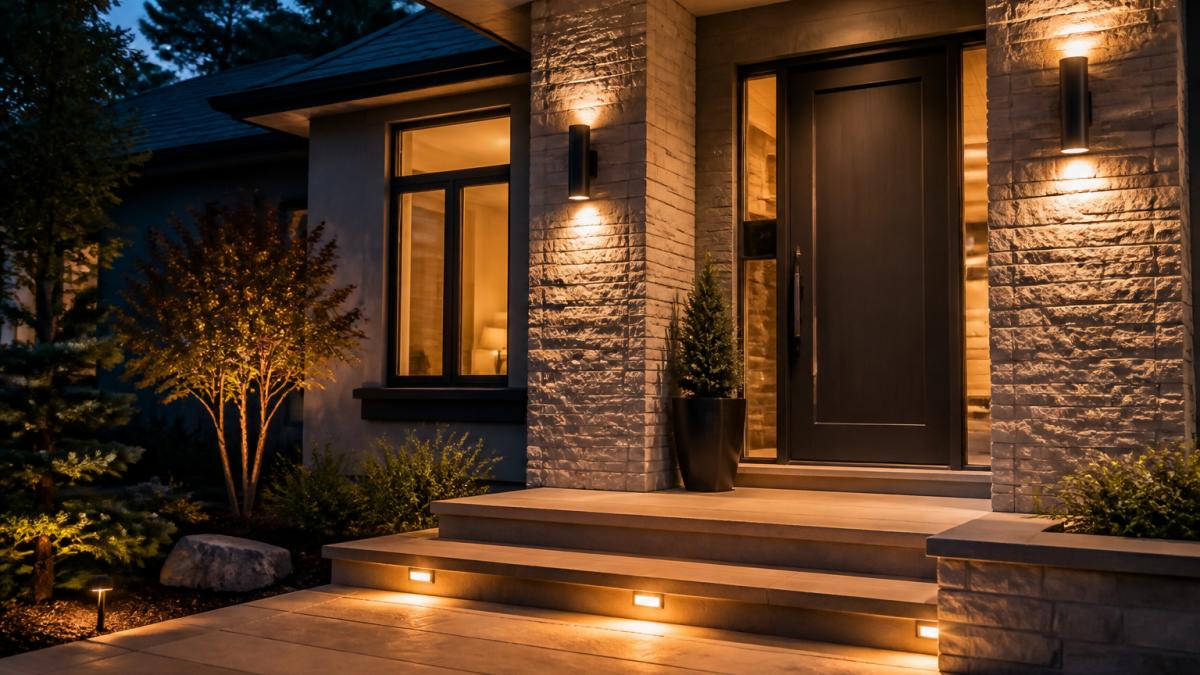
Your entryway makes the first impression and serves critical security functions. Symmetrical sconces flanking your door create formal balance; asymmetrical arrangements suit contemporary homes; single overhead fixtures work for smaller porches or modern farmhouse styles.
Entryway lighting should deliver 20-50 foot-candles to safely illuminate steps and door hardware. Warm white (2700-3000K) feels welcoming and balances hospitality with visibility.
Match fixture style to your home's architecture: modern homes pair with geometric sconces or minimalist lanterns; farmhouse styles suit traditional lantern shapes; transitional homes work with contemporary profiles in traditional finishes.
Pathway and Garden Lighting
Path lights should deliver 50-100 lumens spaced 4-6 feet apart at 2700K warm white. Narrow beam angles (15-30 degrees) concentrate light on the walking surface, reducing light spill and glare.
Garden accent lighting uses uplighting to showcase trees and stone features, or downlighting from pergolas to create layered depth. Accent lights typically use 50-200 lumens. The key is restraint: one well-placed accent light creates drama; multiple overlapping lights produce chaos. Start with path lighting, then add 2-3 accent lights.
For garden zones, use warm white (2700K) to maintain cohesion with entryway and patio lighting. Medium beam angles (40-60 degrees) work well for accent lighting. Modern landscape fixtures emphasize subtle integration through recessed mounting or sleek profiles.
Patio and Entertaining Zones
Patio spaces need versatile lighting for different activities. String lights create festive atmosphere; overhead fixtures provide general illumination; wall sconces frame seating areas. For dining, overhead fixtures should deliver 50-75 foot-candles with dimmable controls. String lights remain popular, affordable, easy to install, and creating genuine ambiance. Position them overhead in geometric patterns to define seating zones.
Layering is essential on patios. Combine overhead fixtures (500-1500 lumens) with wall sconces (100-400 lumens each) and accent lighting. Use consistent warm white (2700-3000K) across all zones to maintain visual cohesion.
Contemporary and Farmhouse Finishes
Modern outdoor lighting finishes dramatically affect how fixtures integrate with your home's exterior. Contemporary designs favor matte black, brushed aluminum, and gunmetal gray, finishes that hide dirt and weather patina while complementing modern architecture.
Farmhouse styles emphasize warm metals and vintage finishes like oil-rubbed bronze, aged brass, and weathered copper. These develop natural patina over time, adding authenticity. Farmhouse fixtures often feature lantern shapes and decorative details that contemporary designs omit.
Transitional homes benefit from finishes that bridge both aesthetics, brushed bronze or warm gray. The key is consistency: match your porch fixtures to landscape and patio lighting to create visual cohesion.
Key Takeaway
Your lighting finish should complement your home's trim, siding, and existing metal hardware. Mixing finishes (matte black sconces with bronze landscape lights) creates visual discord. Select 1-2 primary finishes and use them consistently across all outdoor areas.
Brightness, Color Temperature, and Beam Angle
Lumens measure visible light output: path lights deliver 50-100 lumens, wall sconces 100-400 lumens, patio overhead fixtures 500-1500 lumens. More lumens isn't always better; excessive brightness creates glare and washes out ambiance. Match output to your specific space and intended use.
Color temperature affects mood and visibility. Warm white (2700K) creates cozy atmospheres ideal for entertaining; neutral white (3000-4000K) balances warmth with visibility for task areas; cool white (5000K+) emphasizes brightness but feels institutional for residential spaces.
Creative Outdoor Waterproof Wall Lamp Decoration →
Beam angle determines light spread: narrow angles (15-30 degrees) concentrate light for accent and security; medium angles (40-60 degrees) provide balanced spread for general illumination; wide angles (90+ degrees) distribute light broadly for large patios.
Weather Resistance, Durability, and Installation
Modern outdoor lighting must withstand temperature swings, moisture, wind, and UV exposure. Understanding weather ratings, material durability, and installation requirements helps you choose fixtures that perform reliably and match your comfort level with DIY work.
Weather Ratings and Material Selection
Quality outdoor fixtures feature IP (Ingress Protection) ratings: the first digit rates dust protection (0-6), the second rates water protection (0-8).
IP65 fixtures resist water jets from any direction and work well for wall sconces, overhead patio fixtures, and most landscape lights. IP67-IP68 ratings suit areas with standing water or pool-adjacent installations; IP67 fixtures can be temporarily submerged, IP68 fixtures withstand continuous submersion.
Material selection determines longevity. Aluminum resists corrosion better than steel and is lighter for mounting. Stainless steel offers superior durability but costs more. Powder-coated finishes protect metal from rust and UV fading. Quality fixtures use sealed gaskets, stainless steel fasteners, and corrosion-resistant hardware. Avoid fixtures with exposed steel fasteners or unsealed joints.
Installation Complexity by Fixture Type
Installation difficulty varies significantly by fixture type, affecting whether you can DIY or need a licensed electrician.
Wall Sconces require hardwired electrical connections and typically need a licensed electrician, especially for new circuits.
Path Lights and Landscape Fixtures often use low-voltage systems (12V) powered by a transformer plugged into a standard outlet. These eliminate permits, hardwiring, and electrician needs.
String Lights need secure mounting points but minimal wiring. Most plug into standard outlets via weatherproof extension cords. Installation is straightforward: secure cables, plug in, and adjust tension.
Overhead Patio Fixtures require hardwired installation for new circuits. Replacing existing fixtures on established circuits may be DIY-friendly, but electrical code compliance is critical.
Watch Out
Always check local electrical codes before installing hardwired fixtures. Many jurisdictions require a licensed electrician for any new outdoor circuits or modifications to existing ones. Improper installation creates fire and shock hazards. When in doubt, hire a professional.
Maintenance and Long-Term Care
Maintenance requirements affect long-term satisfaction and total cost of ownership.
Sealed Fixtures resist dirt accumulation and require occasional cleaning (soft cloth and mild soap every 6-12 months). Open or Exposed Designs collect dust and pollen, requiring cleaning every 3-4 months.
Matte Finishes hide fingerprints and water spots better than polished surfaces. Powder-Coated Finishes develop small chips over years; touch-up paint extends fixture life.
Gaskets and Seals degrade over 5-10 years; if a fixture leaks, the gasket likely needs replacement. LED fixtures rarely need bulb replacement (rated 25,000-50,000 hours). Acrylic lenses yellow over time;
Operating Costs and Controls
Modern outdoor lighting can run continuously or be controlled via timers, motion sensors, and smart home integration, significantly affecting energy use and convenience.
LED Fixtures consume 75-80% less energy than incandescent equivalents, Solar Fixtures eliminate operating costs but deliver lower brightness (50-150 lumens) and work best for accent and path lighting.
Timers turn fixtures on/off at set times ($15-$50 per timer). Motion Sensors reduce operating hours by 50-70% ($20-$100 per sensor). Smart Home Integration enables remote control and scheduling ($30-$100 per fixture).
Common Mistakes to Avoid
The most common mistake is installing uniform brightness across all outdoor areas.
Another frequent error is ignoring color temperature consistency. Mixing warm and cool white lights creates visual discord. Use consistent warm white (2700-3000K) throughout for cohesive, welcoming atmospheres.
Many homeowners overlook beam angle when selecting fixtures. A 120-degree beam angle floods your patio with light, creating glare. Narrower angles (30-60 degrees) provide focused illumination.
Oversizing fixtures is another common pitfall.
Finally, many homeowners prioritize appearance over weather resistance. Budget fixtures with poor sealing fail within seasons.
Modern outdoor lighting transforms your exterior spaces into functional, beautiful environments that reflect your personal style. The right fixtures combine contemporary aesthetics with practical brightness and weather durability.
| Lighting Type | Best For | Typical Lumens | Ideal Color Temperature |
|---|---|---|---|
| Wall Sconces | Entryways, accent lighting | 100-400 | 2700-3000K |
| Path Lights | Walkways, safety | 50-100 | 2700K |
| Patio Overhead | General illumination, dining | 500-1500 | 2700-3000K |
| String Lights | Entertaining, ambiance | 200-500 total | 2700K |
| Landscape Accent | Trees, architectural features | 50-200 | 2700K |
Frequently Asked Questions
What color temperature works best for modern outdoor lighting?
Modern outdoor lighting typically uses warm white (2700-3000K) for ambiance around patios and entryways. Warm tones create an inviting atmosphere for entertaining. The Creative Outdoor Waterproof Wall Lamp features a 3000K warm white output, ideal for creating a welcoming aesthetic in contemporary outdoor spaces.
How do I plan outdoor lighting for different zones?
Divide your outdoor space into functional zones: entryway (accent and security), patio (ambient and entertaining), garden (accent and path lighting), and perimeter (safety and definition). Each zone serves a different purpose. Start with task lighting for safety, add ambient lighting for atmosphere, and layer in accent pieces to highlight architectural features or landscaping. This approach prevents over-lighting and creates visual interest.
What makes outdoor lighting weather-resistant?
Look for fixtures with IP65 rating or higher, which means they're dust-tight and can withstand water jets from any direction. Materials matter too: aluminum and stainless steel resist corrosion better than other metals. The Creative Outdoor Waterproof Wall Lamp uses an aluminum shell with IP65 protection, making it suitable for exposed outdoor settings. Check that wiring and connections are sealed against moisture and UV-rated materials are used for any plastic components.
Can I use modern outdoor lighting in a rental apartment?
Yes. Choose temporary, moveable fixtures like string lights that attach to existing structures, and solar pathway lights that need no wiring. Always check your lease. Avoid hardwired installations or fixtures that require drilling into shared walls.