Cart
0
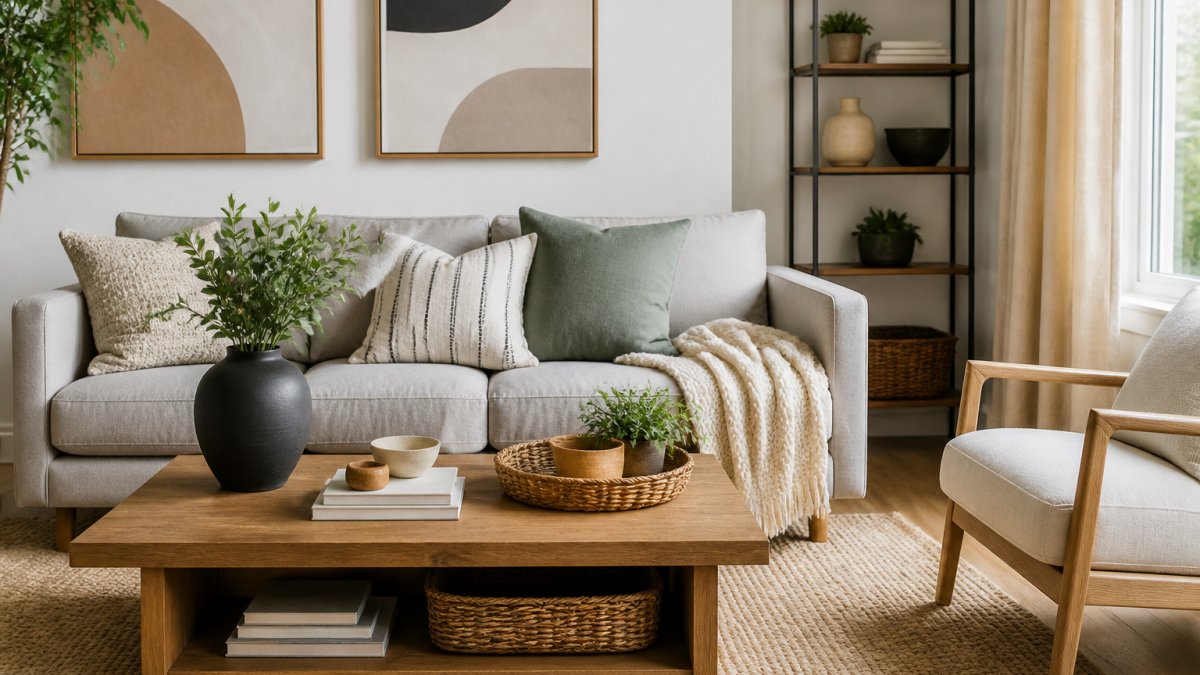
Table of Contents
- 1. Start With Furniture Arrangement and Room Layout
- 2. Get the Rug Size and Placement Right
- 3. Declutter and Edit Your Accessories
- 4. Layer Throw Pillows, Blankets, and Texture
- 5. Living Room Lighting Ideas That Change the Whole Room
- 6. How to Make a Living Room Look Finished With Color and Wall Art
- 7. Living Room Updates on a Budget: What to Change First
- Conclusion: A Better Living Room in One Weekend
- Frequently Asked Questions
Last Updated: October 12, 2026
1. Start With Furniture Arrangement and Room Layout
Most people try to make a living room look better by buying something new. That is usually the wrong first move. The fastest improvement comes from moving what you already own. Furniture arrangement is the single biggest lever you have, because it decides how the room feels before a single accessory lands.

The goal is a conversation circle, not a furniture showroom. Pull seating away from the walls, angle pieces toward each other, and leave a clear path to walk through. A common mistake is pushing everything against the perimeter, which makes even a generous room feel like a waiting area.
Scale and proportion matter just as much. A huge sofa in a small room swallows the space; a tiny loveseat in a large room looks lost. Measure your room, then measure your furniture. If the numbers do not agree, the layout will never feel right.
Room-Specific Layout Plans for Small and Large Spaces
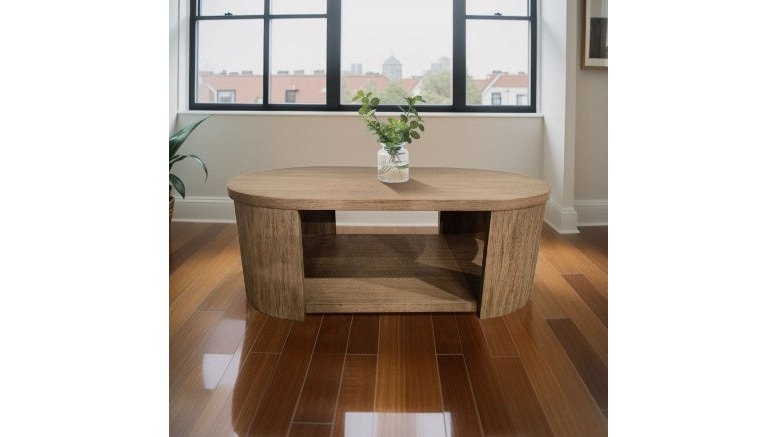
Small rooms benefit from a single clear anchor. Choose one piece, such as a compact sofa, and build the layout around it. Keep walkways at least 60 centimetres wide so the room does not feel cramped. Round or oval coffee tables work well here because they have no sharp corners to catch a shin in a tight space.
Large rooms need the opposite treatment: they need to be broken into zones. Create one seating cluster for conversation and a second for reading or watching television. A rug under each zone does the dividing work for you.
Pro Tip
A quick way to test a layout before you move anything: sketch the room on paper, cut out paper shapes for each piece of furniture, and slide them around. You will spot a bad arrangement in two minutes without lifting a sofa.
2. Get the Rug Size and Placement Right
Rug size is the most common mistake in living rooms, and it is an easy fix. A rug that is too small makes the whole room look unfinished, no matter how good the furniture is. The rule is simple: at least the front legs of every seating piece should sit on the rug. If only the coffee table touches it, the rug is too small.
For placement, centre the rug under your main seating group. In an open-plan space, let the rug define the conversation zone and stop it before the walkway. A round rug can soften a square room and break up all the straight lines.
Material matters for daily life. Polyester and similar practical fabrics handle foot traffic and clean up well, which matters if you have children or pets. A machine-woven rug is a reasonable choice for a busy room, while a flatter weave suits a space where doors need to swing freely.
Watch Out
Do not buy a rug before you finalise the furniture layout. A rug sized for the wrong arrangement is money wasted, and returning a large rug is a genuine hassle.
3. Declutter and Edit Your Accessories
Decluttering is not about owning less. It is about letting the pieces you love breathe. A surface covered in small objects reads as noise, and noise is what makes a room feel unfinished. Edit ruthlessly, then edit again.
Start with flat surfaces: coffee tables, side tables, shelves. Remove everything, then add back only what earns its place. A general guideline is odd numbers of objects in a group, varied in height, with one clear focal point per surface.
Wall art follows the same logic. One large piece makes a stronger statement than five small ones scattered across a wall. If you are unsure, tape paper outlines to the wall first and live with them for a day before hanging anything.
- Clear every flat surface completely, then add back three to five items
- Group objects in odd numbers and vary the heights
- Keep one focal point per surface, not three competing ones
- Store the rest and rotate pieces seasonally instead of displaying everything at once
4. Layer Throw Pillows, Blankets, and Texture
Texture is what makes a room feel warm rather than flat, and it costs very little to add. A room with one fabric, one finish and one colour will always look thin, even if every piece is expensive.
Throw pillows are the fastest texture tool you have. Mix a smooth fabric with a nubby one, and a solid with a subtle pattern.
Throw blankets add softness and a sense of use. Drape one over the arm of a sofa or the back of a chair. A chunky knit next to a smooth velvet reads as intentional contrast.
Wood tones count as texture too. Mixing a warm walnut with a lighter oak, or adding a black accent against neutral tones, gives the eye something to travel across.
5. Living Room Lighting Ideas That Change the Whole Room
Lighting is the update most people skip, and it is the one that changes a room fastest. Overhead light alone flattens everything. Layer your lighting instead, using three sources at different heights.
Modern Velvet Loveseat Futon Sofa Couch W Pullout Bed,Small Love Seat Lounge →
The three layers are ambient, task and accent. Ambient light fills the room. Task light serves a specific activity, such as reading. Accent light picks out a feature, like wall art or a plant. When all three work together, the room gains depth.
Swap a single harsh ceiling light for a mix. A wall lamp with a wooden shade throws warm light across a wall and adds a soft glow at eye level. Warm white light suits living rooms; cooler white light belongs in workspaces. If you work from your living room, a neutral 4000K setting keeps you alert without feeling clinical.

- Ambient: a dimmable ceiling fixture or floor lamp for overall fill
- Task: a reading lamp beside your main seat
- Accent: a wall lamp or small uplight behind a plant or artwork
- Always put living room lighting on dimmers where you can
Key Takeaway
If you only change one thing this weekend, change the lighting. Adding two warm, low-level light sources to a room lit by one overhead bulb transforms how the space feels more than any new piece of furniture.
6. How to Make a Living Room Look Finished With Color and Wall Art
A living room looks finished when the colour feels deliberate, not accidental. The most reliable method is the 60-30-10 rule, and it works because it gives the eye a clear hierarchy.
The 60-30-10 Rule and Why It Works
The 60-30-10 rule splits a room's colour into three parts. Sixty percent is your dominant colour, usually the walls and large upholstery. Thirty percent is a secondary colour, such as a rug, curtains or a larger piece of furniture. Ten percent is an accent, brought in through pillows, art or small decor.
The reason it works is contrast. Without a dominant tone, a room feels busy; without an accent, it feels flat. Warm neutrals and muted greens are forgiving choices because they sit well beside wood tones and black accents.
Colour drenching, painting walls, trim and ceiling in one related tone, is a bolder route. It makes a small room feel larger and more cohesive, but it leaves less room for error. Test a sample patch in daylight before committing.
Wall art finishes the job. Hang pieces so the centre sits at roughly eye level, and keep the arrangement tied to the furniture below it rather than floating high on the wall.
| Colour Role | Share of Room | Where It Goes | Example |
|---|---|---|---|
| Dominant | 60% | Walls, large upholstery | Warm neutral |
| Secondary | 30% | Rug, curtains, bigger furniture | Muted green |
| Accent | 10% | Pillows, art, small decor | Black or brass |
7. Living Room Updates on a Budget: What to Change First
Budget living room updates work best in a fixed order. Spend on the things you touch and see every day, and save on the things nobody notices. That order is layout, then lighting, then textiles, then art.
Layout is free. Moving furniture costs nothing and delivers the biggest change. Lighting is next and usually the cheapest real upgrade, since a single wall lamp can shift the mood of an entire wall. Textiles, including pillows and a throw, come third.
Renters have more options than they think. Almost everything in this list is reversible. Rugs, lamps, curtains and art can all be taken down and taken with you. Nothing here requires drilling into a wall or asking a landlord for permission.
Secondhand is a genuine route to a better room on a small budget. Good frames, lamps and solid wood side tables turn up regularly, and a coat of paint or a new shade brings them up to date.
Pro Tip
Buy the rug and the lighting before you buy decor. Those two items carry more visual weight than any shelf of small objects, and getting them right makes everything else easier to place.
Conclusion: A Better Living Room in One Weekend
The challenge with any living room refresh is knowing where to start, and most people start in the wrong place. Buy the big anchor pieces first, then build the rest around them. At Domicile Digs, we stock the pieces that make this sequence easier, from a velvet loveseat with a pullout bed and reclining backrest to a height-adjustable coffee table with hidden compartments and a wooden LED wall lamp with adjustable warm, white and neutral settings. Start with the layout, add the lighting, then layer in the textiles and art. Get started with Domicile Digs and build a living room that finally looks finished.

Frequently Asked Questions
What is the 60-30-10 rule for decorating living rooms?
The 60-30-10 rule divides a room's color palette into three parts. Sixty percent is your dominant neutral (walls, large upholstery like a gray corduroy sofa), 30 percent is a secondary tone (curtains, a rug, wood tones), and 10 percent is an accent color (pillows, art, black accents). It works because it keeps a room from feeling flat without tipping into chaos. Start with warm neutrals or muted greens as your base, then pick one accent you actually love.
How can I make my living room look more finished?
Finished rooms share three things: proper scale, layered lighting, and edited surfaces. Pull furniture off the walls so it relates to the room, not just the walls. Add a floor lamp, a table lamp, and a wall lamp at different heights instead of relying on one overhead fixture. Then clear every surface down to a few intentional pieces. A single ceramic object on a coffee table reads more finished than five small items competing for attention.
How can I make a living room look better on a budget?
Focus on the pieces that touch the most surface area. A round polyester rug, chenille blackout curtains, and a canvas wall art poster cost less than replacing a sofa but change how the whole room reads. Rearranging what you already own costs nothing. If you do buy, prioritize lighting and textiles first, since those affect how every other object in the room looks. Secondhand decor and reversible changes keep costs down.
What are the easiest ways to update a living room without replacing furniture?
Swap your throw pillows and add a throw blanket in a contrasting texture. Move your rug so at least the front legs of your seating sit on it. Change your curtains to a solid color like water cube-beige to simplify the window line. Add a wall lamp for layered light. None of these require moving heavy furniture out, and each one shifts the room's visual balance without a major spend.
How do I make a small living room look more spacious?
Choose furniture with a smaller footprint and a lighter visual weight. A velvet loveseat at 55.2 inches long fits where a full three-seater will not, and it still converts to a sleeper bed. Keep the rug proportional to the room rather than oversized. Use a coffee table with hidden storage so clutter has a home. Mirrors and light-toned curtains also help, but the biggest gain comes from leaving walking space clear between seating and walls.