Cart
0

Table of Contents
- Step 1: Choose Your Primary Style and Secondary Style
- Step 2: How to Combine Decorating Styles with a Shared Visual Throughline
- Step 3: Create Cohesion with a Consistent Color Palette
- Step 4: Mixing Modern and Traditional Decor Without Visual Conflict
- Step 5: How to Mix Patterns in Home Decor Using the 70/30 Rule
- Step 6: Balance Visual Weight with Furniture and Focal Points
- Room-by-Room Mixing: Practical Examples and Common Mistakes
- Budget-Conscious Mixing: Prioritize What Matters
- Frequently Asked Questions
Last Updated: October 18, 2026
Step 1: Choose Your Primary Style and Secondary Style
Mixing home decor styles starts with a clear foundation: pick one style you love most as your primary, then choose a complementary secondary style.
Your primary style sets the mood for the entire room. It might be modern, traditional, vintage, or eclectic. This style should dominate about 70% of your space.
Rooms without a clear primary style feel scattered.
At Domicile Digs, we help customers find their primary style through our thoughtfully curated selection of home essentials. Start by looking at pieces that make you pause.
How to identify your styles:
- Scroll through home decor photos and save ones you love
- Notice which styles appear most often in your collection
- Look for common threads: modern = clean lines, traditional = ornate details, vintage = aged materials
- Your secondary style should have at least one visual element in common with your primary style
Step 2: How to Combine Decorating Styles with a Shared Visual Throughline
A throughline is the glue holding your design together. Without it, mixed styles feel disconnected; with it, they feel intentional. It's the difference between "eclectic" and "chaotic."
Common throughlines include:
- Color: A neutral palette (whites, grays, blacks) or a signature color that appears in multiple pieces
- Material: Wood tones, metal finishes, or natural textures that bridge different styles
- Pattern: Geometric shapes, botanical prints, or abstract designs that repeat across textiles and accessories
- Design element: Curves, straight lines, or architectural details that appear in furniture and decor
The best throughlines are subtle and feel like a natural choice, not forced. Guests shouldn't consciously notice the throughline, just feel that everything belongs together.
Finding your throughline:
- Look at your primary and secondary styles
- Identify what they have in common visually
- Use that commonality as your anchor
- Repeat it in at least three different areas of the room
A shared visual throughline keeps mixed styles from feeling like random pieces and creates cohesion with intention.
Step 3: Create Cohesion with a Consistent Color Palette
Your color palette is one of the most powerful tools for cohesion.
Start with a base of neutral colors. Whites, grays, beiges, and blacks work as anchors. They let your primary and secondary styles shine without competing for attention.
Building your color palette:
- Choose 2-3 neutral base colors
- Select 2-3 accent colors that complement both your primary and secondary styles
- Use the 70/30 rule: 70% neutrals, 30% accent colors
- Repeat accent colors in different rooms to create flow
The key is repetition. If you use a deep blue in your living room accessories, bring that blue into your bedroom through pillows or artwork, tying your entire home together even when your styles mix.
Color psychology matters too. Warm neutrals (beiges, warm grays) feel inviting; cool neutrals (cool grays, whites) feel more modern.
When you combine decorating styles, a consistent color palette prevents visual conflict: modern furniture and traditional accessories coexist beautifully when they share the same color story.
Step 4: Mixing Modern and Traditional Decor Without Visual Conflict
Modern and traditional styles are opposites in many ways: modern favors clean lines and minimalism, while traditional embraces ornate details and richness.
Visual weight refers to how heavy or dominant a piece feels. A large, ornate traditional sofa has high visual weight.
Balancing modern and traditional:
- Pair an ornate traditional mirror with a simple modern frame
- Place a minimalist modern sofa against a traditional patterned wallpaper
- Use modern lighting fixtures above traditional furniture
- Add traditional artwork to modern, sparse walls
Don't mix them randomly. Let your primary style dominate, then layer in the secondary style strategically.
Let one style lead in each area: modern furniture might dominate the living room while traditional pieces lead the bedroom. This creates rhythm without chaos.
Texture plays a role too.
Step 5: How to Mix Patterns in Home Decor Using the 70/30 Rule
Patterns are where many people hesitate when mixing styles: too many feel chaotic, too few feel boring. The 70/30 rule solves this.
The 70/30 rule means 70% of your textiles and accessories have no pattern or subtle patterns, while the remaining 30% can feature bold, eye-catching patterns. This prevents visual overload while adding interest.
Understanding the 70/30 Rule in Interior Design
The 70/30 rule applies to more than patterns: it's about visual balance across your entire space, letting you mix styles without overwhelming the room.
In practice, this means:
- 70% solid colors or minimal patterns (your anchor)
- 20% medium patterns (your supporting layer)
- 10% bold patterns (your statement pieces)
This framework keeps your eye moving without fatigue: bold patterns draw attention, subtle patterns add texture, and solids give your eyes rest.
The rule also applies to how much of each style you use: if modern is primary, let it occupy about 70% of your space, with the secondary style filling the remaining 30% so it never overwhelms your primary style.
Applying Patterns to Textiles and Accessories
Textiles are where patterns come to life. Rugs, throw pillows, curtains, and blankets carry most of your pattern weight.
Pattern placement strategy:
- Use one bold pattern as a focal point (perhaps a rug or large throw pillow)
- Add 2-3 medium patterns in complementary colors (smaller pillows, artwork)
- Keep the rest of your textiles solid or subtly patterned
- Repeat pattern themes across the room (if you use geometric patterns, use them in multiple places)
Geometric patterns work well when mixing styles. They bridge modern and traditional. Botanical patterns add softness. Abstract patterns feel contemporary. Choose patterns that support your primary style.
The 70/30 rule prevents pattern fatigue. When you follow it, your space feels curated rather than cluttered. Patterns become intentional accents instead of visual noise.
Step 6: Balance Visual Weight with Furniture and Focal Points
Visual weight is how dominant or heavy a piece feels in a space. Large, dark, ornate furniture has high visual weight.
A room with all heavy furniture feels oppressive; all light furniture feels insubstantial.
Creating balance through visual weight:
- Pair one large statement piece with several smaller pieces
- Use light colors for heavy furniture to reduce visual weight
- Use dark colors for small furniture to increase visual weight
- Distribute visual weight evenly around the room
Your focal point is the piece that draws the eye first.
When you choose a focal point, make sure it reflects your primary style. Then arrange other furniture to complement it.
The best focal points are intentional. They're chosen, not accidental. This is where your primary style shines brightest.
Room-by-Room Mixing: Practical Examples and Common Mistakes
Mixing styles works differently in different rooms. A living room has different needs than a bedroom. Understanding room-specific challenges helps you apply mixing principles successfully.
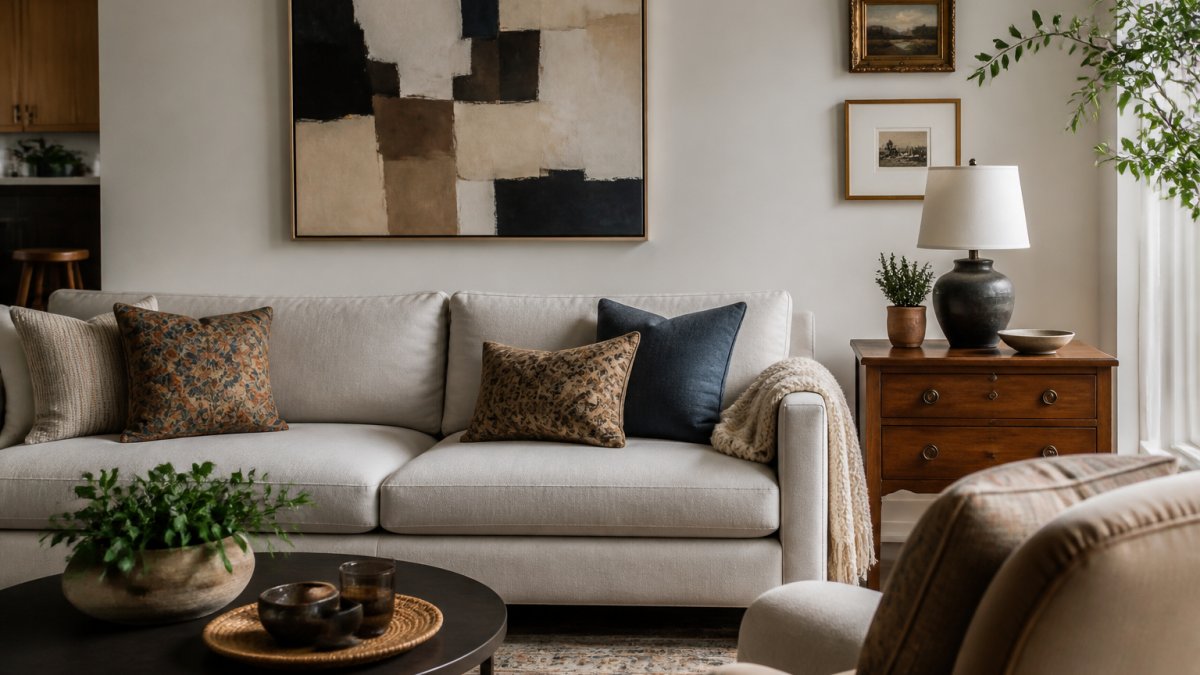
Living Room: Balancing Statement Pieces with Neutral Accents
Your living room is where guests spend time. It's the perfect place to showcase how to mix home decor styles. When you mix home decor styles, start with a strong focal point, usually your sofa or a large artwork.
If your sofa is modern, add traditional elements through accessories. A modern sectional looks stunning with traditional throw pillows and a vintage rug.
Living room mixing tips:
- Choose one statement piece as your focal point
- Keep the walls neutral to let furniture shine
- Layer textiles in your color palette
- Add artwork that bridges your two styles
- Use a rug to anchor the seating area
Common mistake: Too many competing focal points. If your sofa is bold and your artwork is equally bold, they fight for attention. Choose one focal point and let others support it.
Bedroom: Layering Textures for Comfort and Style
Bedrooms should feel calm and restful. This makes texture layering especially important. Mix smooth and rough textures, soft and structured materials.
A modern platform bed pairs beautifully with traditional bedding. Add a vintage throw blanket for warmth and texture. Layer pillows in different fabrics, linen, velvet, cotton. This creates visual interest without chaos.
Bedroom mixing strategies:
- Start with a neutral bed frame
- Layer bedding in your color palette
- Add a statement headboard if your style allows
- Use nightstands from a different era
- Incorporate soft textures through blankets and pillows
Common mistake: Forgetting about proportion. A massive traditional bed in a small modern bedroom overwhelms the space. Choose furniture scaled to your room, then let style be secondary.
Small Spaces and Rentals: Mixing Styles Without Permanent Changes
Small spaces need strategic mixing. You can't rely on size to balance styles. Instead, use color, texture, and carefully chosen pieces.
Renters face additional challenges. You can't paint walls or install permanent fixtures. Focus on removable elements: rugs, throw pillows, artwork, and accessories.
Small space and rental solutions:
- Use a large rug to define the space and anchor your style
- Layer throw pillows to add pattern and color
- Hang artwork to draw the eye upward
- Choose multifunctional furniture that serves your primary style
- Add plants and accessories for texture without taking up space
Common mistake: Trying to fit too much into a small space. Less is more in compact rooms. Choose fewer pieces that you love rather than filling every corner.
Renters should focus on accessories and temporary elements.
Budget-Conscious Mixing: Prioritize What Matters
Mixing styles doesn't require a large budget. The key is prioritizing where you spend money.
Large furniture pieces set the tone for your room. Invest here. A quality sofa in your primary style lasts years.
Budget-smart mixing:
- Invest in large furniture that reflects your primary style
- Buy secondary style pieces from budget-friendly retailers
- Use accessories to test new styles before committing
- Shop vintage and secondhand for unique pieces
- DIY or upcycle pieces to save money
The most expensive pieces should anchor your room. Everything else can be more affordable.
Domicile Digs offers thoughtfully curated home essentials.
Common mistake: Spending equally on all pieces. Your sofa matters more than your throw pillows. Your focal point furniture matters more than your accessories.
Mixing home decor styles is about creating intentional cohesion. Explore our collection of decor accents, lighting, and organizational pieces to build a home that truly reflects your personal style.
Frequently Asked Questions
What is the 70/30 rule in interior design?
The 70/30 rule means 70% of your space should feature your dominant style, color palette, and materials, while 30% introduces your secondary style, contrasting accents, or statement pieces. This proportion prevents visual chaos while allowing personality to show through. For example, a modern room might be 70% clean lines and neutral tones, with 30% vintage accessories or warm wood tones mixed in. This balance keeps the space cohesive without feeling monotonous.
How do you make different decorating styles look cohesive when mixing them?
Create cohesion by establishing a shared visual throughline: a consistent color palette, repeated materials (like wood tones or metallic finishes), or a common theme (vintage, nature-inspired, minimalist). Limit your color scheme to 3-4 main colors plus neutrals. Use the same textures across different style pieces, pairing modern furniture with traditional rugs, for instance. Ensure your focal point anchors the mixed aesthetic, and repeat design elements (patterns, metals, or silhouettes) throughout the room to tie styles together intentionally.
Can you mix more than two interior design styles in one room?
Yes, you can mix three or more styles, but success depends on restraint and a strong unifying element. Designate one dominant style (60-70% of the room), then introduce one or two secondary styles through accessories, textiles, and accent pieces. A shared color palette and repeated materials are essential when layering multiple styles. For example, a room could blend modern, vintage, and eclectic elements if they're connected by warm wood tones, a neutral base, and intentional focal points. The key is that each piece feels purposeful, not random.
How do I know if my mixed styles actually work together, especially in small spaces or rentals?
Test your mix by photographing the space from different angles and assessing visual balance. In small spaces, use the 70/30 rule strictly to avoid overwhelming the room. For rentals, focus on moveable, removable pieces like throw pillows, rugs, artwork, and accessories that won't require permanent installation. Stick to a tight color palette and avoid clashing silhouettes. If something feels off, it's usually because the color scheme isn't cohesive or the visual weight is unbalanced. Start with your most-loved piece as the anchor, then build around it with complementary styles.