Cart
0
Table of Contents
- Why Traditional Accent Furniture No Longer Fits Every Room
- Modern Accent Furniture Ideas That Replace Heavy Traditional Pieces
- Mixing Modern and Traditional Furniture for a Balanced Room
- Accent Chairs for Living Rooms: Choosing the Right Scale and Shape
- Vintage Accent Furniture: When an Old Piece Still Works
- Room-by-Room Alternatives and Budget Tiers
- Materials, Durability, and Maintenance
- Frequently Asked Questions
Last Updated: October 16, 2026
Why Traditional Accent Furniture No Longer Fits Every Room
Traditional accent furniture was built for formal living rooms with generous floor space. Dark wood, heavy carving, and oversized silhouettes suited a style of entertaining most homes no longer host.
At Domicile Digs, customers ask for the same thing: pieces that feel elegant without dominating a room and earn their footprint through storage, flexibility, or comfort. A heavy traditional side table gives back only a surface; a modern alternative adds drawers, a swivel base, or a corner-friendly shape.
Key Takeaway
The question is no longer "traditional or modern." It's "which piece does the most work in this room?" Traditional decor earns its place through presence; contemporary accent furniture earns it through function.
Modern Accent Furniture Ideas That Replace Heavy Traditional Pieces
Modern accent furniture ideas solve two problems at once: they lighten a room's visual weight and add utility traditional pieces lack. Where a traditional console table is mostly decorative, a modern equivalent can hide clutter, rotate, or fold flat.
Sculptural Coffee Tables With Hidden Storage
A coffee table is the easiest place to start: it sits at the center of the room and sets the tone.

The Unique Design Coffee Table With 4 Hidden Storage Compartments is a good example.
For a warmer, more traditional-leaning room, the Walnut MDF And Oak Living Room Coffee Table keeps the wood tones traditional decor relies on while dropping the heavy carving and dark stain.

Swivel and Statement Seating
Seating is where traditional decor feels heaviest. A fixed wingback commits a corner to one purpose; a swivel chair turns to face the conversation, the television, or the window without moving.
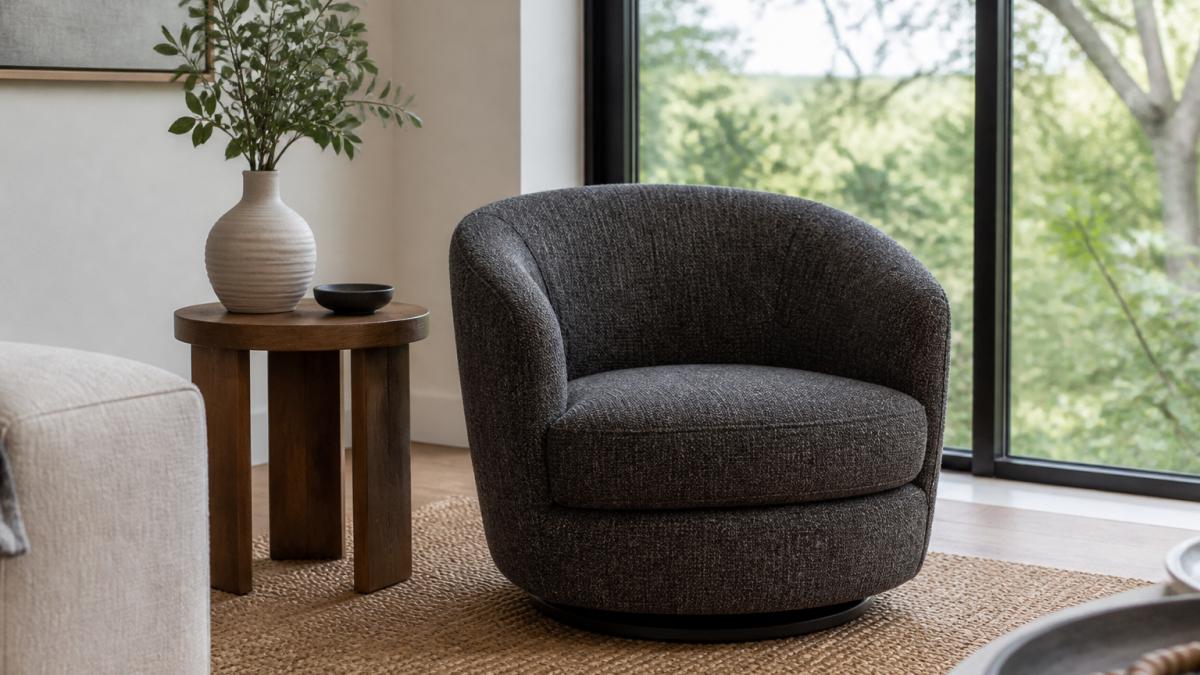
The Large Rotating Decorative Chair is a barrel-style swivel with full 360-degree rotation and a plush chenille cushion in dark grey, and it assembles without complex tools. For more traditional character, the Modern Patchwork Upholstery Chairs pair solid wood armrests and feet with green and dark green teddy bear fabric.
Pro Tip
If you're replacing a traditional armchair, measure the diagonal depth of your corner, not just the wall length. Swivel and barrel chairs need clearance behind them to rotate, and a chair that fits the wall can still bump the wall when it turns.
Mixing Modern and Traditional Furniture for a Balanced Room
Mixing modern and traditional furniture works best when you keep one element consistent across both styles, usually scale or color, not era. An all-traditional room feels dated; an all-modern one feels cold.
A practical framework for blending the two:
- Anchor with one traditional piece. A dark cherry end table or a wood-framed chair gives the room warmth and a sense of history.
- Counter it with two modern pieces. A glossy coffee table and a swivel chair in a solid neutral keep the room from tipping into museum territory.
- Repeat one material across both. Wood grain, in any tone, ties traditional and modern pieces together.
The End Table Dark Cherry Open Shelf Natural Wood Grain Design is a good anchor piece: its transitional style, solid wood construction, and open shelf let it sit beside a traditional or modern sofa without looking out of place.

Watch Out
The most common mistake when mixing styles is buying pieces that are all the same height. A room of matched-height furniture looks flat no matter how good each piece is. Vary heights by at least 6 inches between adjacent pieces.
Accent Chairs for Living Rooms: Choosing the Right Scale and Shape
Accent chairs for living rooms are the purchase people most often get wrong: they buy for looks, then discover the chair doesn't fit the room or its users.
Start With Function, Then Scale, Then Shape
Start with function. A reading chair needs a high back and armrests; a conversation chair can be lower and rounder. In a small apartment, favor a swivel base over a fixed frame.
Shape follows scale. The Modern Patchwork Upholstery Chairs sit in the middle at 33.4 inches long, 26 inches wide, and 36.22 inches high, compact enough for a bedroom or studio, tall enough to read as a real chair.
Scale and Proportion: The Numbers That Matter
A few simple measurements prevent most accent-chair mistakes:
- Seat height. 17 to 19 inches from floor to seat top is the standard range for adults. Below 16 inches feels like a lounge chair; above 20 inches feels like a dining chair.
- Seat depth. 20 to 22 inches is comfortable for most adults. Deeper than 24 inches and shorter users will slide forward to reach the floor.
- Arm height. 24 to 27 inches from the floor lets the chair tuck under a standard 29- to 30-inch dining or console table if needed.
To test scale before buying, tape the chair's footprint on the floor and walk the room for a day. If you step on the tape more than once, the chair is too big for that spot.
Room-by-Room Accent Chair Recommendations
Different rooms call for different chair types, and the right choice comes down to how the room is used.
- Living room (primary seating). A swivel barrel chair in a solid neutral works in most layouts because it can face the sofa, television, or window without being moved. The Large Rotating Decorative Chair is a barrel-style swivel with full 360-degree rotation and a plush chenille cushion in dark grey.
- Living room (secondary seating). A slipper chair or low-back accent chair keeps sightlines open. Pair it with a small side table rather than a full end table to preserve floor space.
- Bedroom. A compact upholstered chair with a 17- to 18-inch seat height doubles as a place to dress. The Modern Patchwork Upholstery Chairs pair solid wood armrests and feet with green and dark green teddy bear fabric.
Budget Tiers and Household Needs
Accent chairs span a wide price range; match the tier to how hard the chair will work.
- Low tier (under roughly a few hundred dollars). Best for bedrooms, entryways, and secondary seating. Expect particle board frames, basic foam, and non-removable covers. The Tea Table Creative Living Room Side Table is a solid-wood, multifunctional piece at a low entry price.
- Mid tier. Best for primary living-room seating. Look for kiln-dried hardwood frames, removable or washable covers, and swivel mechanisms rated for daily use.
- High tier. Best for statement pieces and rooms where the chair is the focal point. Expect eight-way hand-tied springs, performance upholstery, and replaceable cushions.
Household needs change the recommendation more than budget:
Unique Design Coffee Table With 4 Hidden Storage Compartments →
- Small spaces. Choose a swivel or barrel chair over a fixed frame, and prefer a chair with a footprint under 30 inches wide.
- Homes with children. Look for rounded edges, removable and washable covers, and fabrics labeled as performance or stain-resistant.
- Renters. Favor chairs that assemble without tools and don't require wall anchoring. The Large Rotating Decorative Chair assembles without complex tools, which matters if you move often.
Best For
Renters and small-apartment dwellers who need a chair that can be repositioned without tools and won't require wall anchoring.
Watch Out
The most common mistake when buying an accent chair is measuring only the wall length. Measure the diagonal depth of the corner, the walkway clearance, and the door swing before you buy. A chair that fits the wall can still block the room.
Vintage Accent Furniture: When an Old Piece Still Works
Vintage accent furniture is worth keeping when it does something a new piece can't: the wood is solid rather than veneered, the proportions are unusual, or the piece has genuine sentimental or historical value. Everything else is usually better replaced.
A Practical Keep-or-Replace Test
Run any vintage piece through these checks before committing floor space:
- Is the frame solid wood, or is it veneer over particle board? Tap the underside, a hollow, uniform sound usually means engineered wood.
- Does it wobble, or can the joints be tightened? Loose joints are often a screwdriver fix; cracked rails are not.
- Does its height work with your current sofa and chairs? A 24-inch side table next to a 32-inch sofa arm looks like a mistake, not a style choice.
A piece that passes four or five checks is worth restoring; one that passes two is clutter with a story. Keep one or two vintage pieces as focal points and let modern accent furniture do the everyday work around them.
Where to Source Vintage Alternatives
Vintage is one of the most overlooked alternatives to traditional decor because it delivers traditional warmth without the matched-set formality. Sourcing options, from lowest to highest effort:
- Estate sales and local auctions. Best for solid-wood end tables, side tables, and small consoles. Bring a tape measure and a magnet, a magnet sticks to steel and iron, not to brass plating or aluminum.
- Facebook Marketplace and Nextdoor. Best for larger pieces like dressers and dining chairs. Ask for a photo of the underside and the back before you drive out.
- Thrift and consignment stores. Best for decor objects, lamps, and small accent tables. Inventory turns over weekly, so check on the same day each week.
The best vintage accent pieces are often those originally built as secondary furniture, side tables, tea tables, small bookcases, because they were made in smaller quantities and with better joinery than mass-market pieces of the same era.
Restoration vs. Refinishing: What Actually Helps
Most vintage wood that has darkened over decades can be lightened with gentle cleaning rather than a full refinish. Stripping usually costs more than the piece is worth and removes the patina that made it worth keeping.
A simple sequence that works for most solid-wood vintage pieces:
- Dust with a dry microfiber cloth.
- Wipe with a damp cloth and a few drops of mild dish soap. Dry immediately.
- For dull finishes, apply a thin coat of paste wax and buff with a clean cloth. Avoid silicone-based polishes, which build up and attract dust.
- For white water rings, a hair dryer on low heat held a few inches away often lifts the moisture without sanding.
- For loose joints, wood glue and a clamp usually outperform metal brackets, which can split old wood.
Pro Tip
If a vintage piece has a strong musty smell, it is usually the finish or the upholstery, not the wood itself. Air it in a dry room for a week before deciding. If the smell persists, the piece is a candidate for replacement, not restoration.
When Vintage Is the Wrong Choice
Vintage is a poor fit for high-traffic entryways, homes with pets or young children, and rooms needing storage in a specific dimension. Old wood scratches, old upholstery holds odors, and old hardware is often non-standard, making repairs slower and pricier than buying new. In those rooms, a modern alternative with a performance finish or washable cover will outlast a vintage piece by years.
Key Takeaway
The best vintage accent piece is the one that earns its footprint through proportion, material, or meaning, not the one that earns it through nostalgia alone.
Room-by-Room Alternatives and Budget Tiers
Different rooms call for different accent furniture alternatives, and the right choice often comes down to budget as much as style.
| Room | Traditional Piece Replaced | Modern Alternative | Budget Tier |
|---|---|---|---|
| Living room | Carved coffee table | Storage coffee table | Mid to high |
| Living room | Fixed wingback | Swivel barrel chair | Mid |
| Bedroom | Heavy nightstand | Side table or tea table | Low |
| Entryway | Console table | Crystal accent light | Low |
| Home office | Wood desk organizer | Ceramic decor object | Low |
For a compact bedroom or rented apartment, the Tea Table Creative Living Room Side Table is a solid wood, multifunctional piece at a low entry price. For an entryway, the Crystal Light Luxury Home Decoration Light replaces a traditional table lamp and cord with a crystal-bodied fixture in warm, white, or three-color dimming.
Small decor pieces finish a room's style without a large spend. The Furniture decoration ceramic piece works on a TV cabinet, wine cabinet, or entryway, and the Modern Abstract Curved Canvas Painting Wall Art Poster adds a modern accent where a traditional framed print would hang.
Materials, Durability, and Maintenance
Materials decide how long an accent piece stays in your home and should match the room's traffic.
A quick guide by material:
- Solid wood: Best for end tables, side tables, and anything that gets moved. Can be repaired. Heavier to shift.
- Particle board with high-gloss finish: Best for coffee tables in low-traffic rooms. Wipe clean easily, but avoid dragging objects across the surface.
- Upholstered fabric: Best for chairs. Chenille and teddy bear fabrics resist fading and wrinkling, but check whether the cover is removable before buying.
Maintenance is simpler than most people expect: dust wood weekly with a dry cloth, wipe gloss surfaces with a damp cloth and mild soap, and vacuum upholstery monthly.
Key Takeaway
Buy the material for the room, not the photo. A high-gloss coffee table that looks perfect in a showroom will show every scuff in a busy family room. Match the finish to the traffic the piece will actually see.
The real challenge with replacing traditional decor isn't finding modern pieces, it's finding ones that fit your actual room, budget, and the way you live.
Frequently Asked Questions
What can I use instead of traditional accent furniture?
Replace heavy traditional accent furniture with lighter, more flexible pieces. A swivel barrel chair offers the same seating function without the bulk. A coffee table with hidden storage compartments replaces a bulky cabinet while keeping the room uncluttered. Sculptural side tables, canvas wall art, and crystal accent lighting all add character without the visual weight of ornate traditional pieces.
How do I mix modern accent furniture with traditional decor?
Start with one or two modern pieces and keep the rest of the room traditional. A contemporary end table with an open shelf can sit beside a classic sofa without clashing. Use neutral tones on the larger traditional pieces and let the modern accent furniture carry the visual contrast. This approach keeps the warmth and timeless character of the room while making it feel fresh.
What accent furniture styles work in a contemporary living room?
Modern accent furniture ideas that work well in contemporary living rooms include swivel chairs with clean lines, square coffee tables with sliding tops, and minimalist wall art. Materials like chenille, solid wood, and ceramic keep the look polished without feeling cold. Stick to a monochromatic scheme or neutral tones with one bold accent color to tie the room together.
Can vintage and modern accent furniture work together?
Yes. Vintage accent furniture and modern pieces can share a room when they have a common thread, such as a similar wood tone or a shared color from the palette. A dark cherry end table with natural wood grain pairs well with a modern upholstered chair in green. The key is balance: let each piece have space so the room does not feel crowded.
How do I choose an accent chair that complements my decor?
Measure the available floor space first, then pick a chair that leaves at least 45 centimetres of walking room around it. Match the chair's material to the room's existing textures. A chenille swivel chair works in both traditional and modern settings. If the room already has bold accents, choose a neutral chair. If the room is calm, a patchwork or textured chair adds the contrast it needs.